Science-Tech and Human-Centric: My Hopes for an AI-Shaped Future
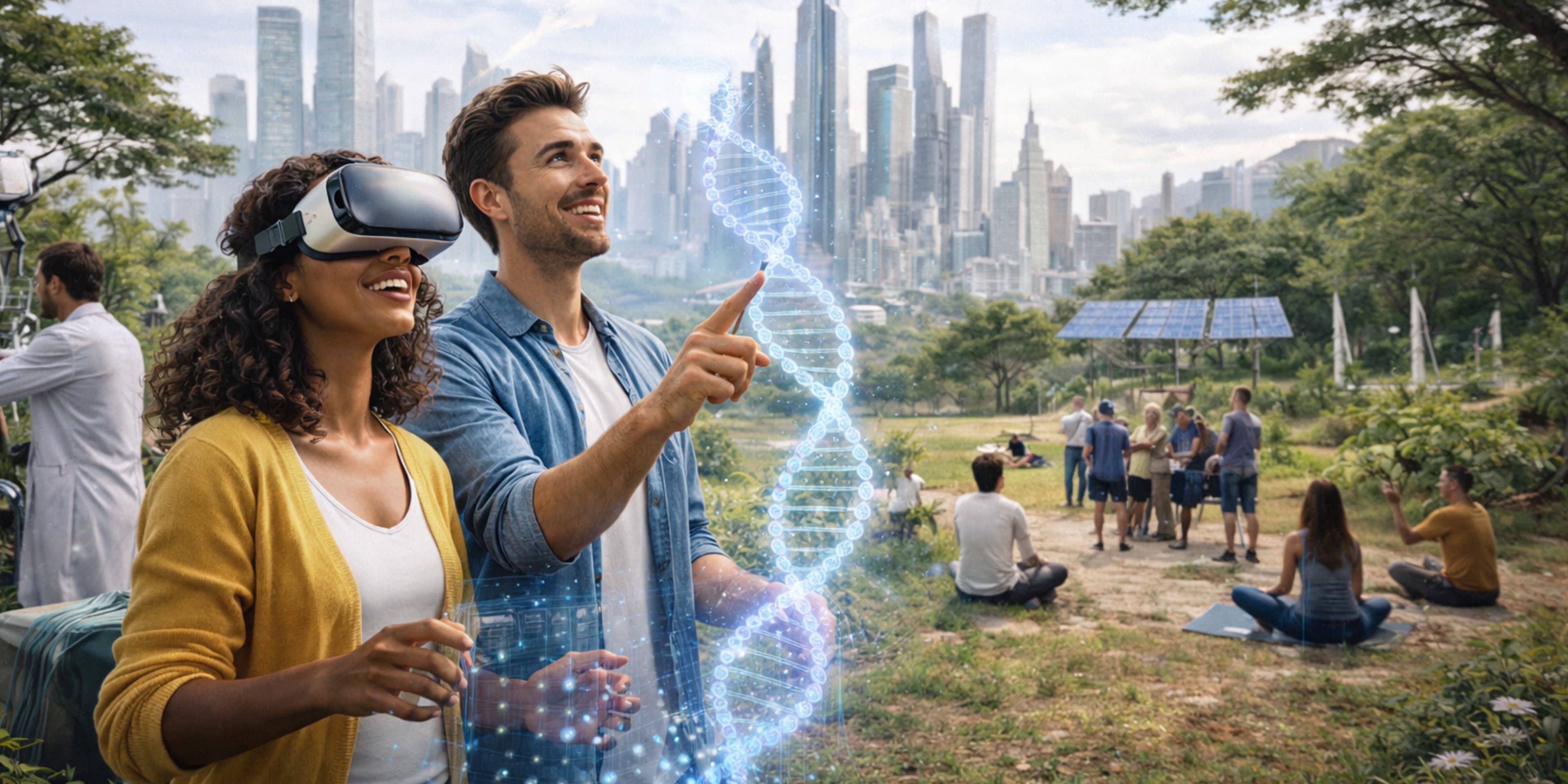
Originally written in 2023, when generative AI was just beginning to reshape mainstream conversations about work and automation. 2026 Update: As AI becomes deeply embedded across industries and daily life, the balance between Science-Tech acceleration and Human-centric value feels even more relevant. I’ll revisit this theme in future posts.
Hello! While deep experts are out there predicting the trajectory of our AI-fueled future, I've been mulling over my own two cents on the matter. The acceleration of AI is reshaping our world. As these systems increasingly step into roles once held by humans, from information technology to analysis, a significant paradigm shift is underway. We're at the threshold of a vast reallocation of resources and expertise.
History reminds us that technological disruptions, while unsettling some job landscapes, also birth new industries and opportunities. In this grand reshuffle, I'm particularly hopeful about two domains: the expansive realm of Science-Tech and the ever-essential sphere of Human-centric endeavors. If these sectors grow and evolve as I envision, it's a future I'm eager to embrace.
And where do I fit into all this? After years in IT, I've ventured into Biopharma (Science-Tech), and alongside, the beats of music, drumming, and jamming with folks (Human-Centric) are echoing louder in my journey.
Let’s embark on this exploration together.
The Two Future Streams
1. Science-Tech Frontiers: Bridging Today and Tomorrow
The realms of science and technology are continually evolving, ushering in transformative changes. With each innovation, we open doors to infinite possibilities and potential solutions to our most pressing challenges.
Below are the pivotal areas that stand at the forefront of this evolution:
- Human Augmentation: Harnessing technology to enhance human capabilities.
- Interdisciplinary Research: Fusing diverse disciplines for groundbreaking solutions.
- Exploration & Adventure: Pushing the boundaries, both on Earth and beyond.
- Ecology & Sustainability: Crafting a greener, more sustainable future.
- Materials Science: Innovating for industries with efficient materials.
- Biopharma & Health: Revolutionizing healthcare through drug discovery and personalized treatments.
- Automation & Robotics: Advancing industries and daily life through automated processes and intelligent machines.
- Quantum Computing: Delving into the next frontier of computational prowess and possibilities.
- Digital & Virtual Realities: Enhancing experiences and training through immersive simulations.
2. Human-Centric Endeavors: Rediscovering Our Essence
In the midst of technological advancements, there remains a timeless yearning for genuine human connections and experiences. The ways in which we, as humans, express, create, and connect form the essence of our existence.
These facets underline our intrinsic need for the human touch:
- Emotional & Mental Well-being: Prioritizing our mental health in an AI-driven world.
- Education & Lifelong Learning: Evolving in sync with the times, constantly adapting and growing.
- Community & Social Work: Building bridges, fostering ties, and addressing societal inequalities.
- Personal Development: Seeking growth, mentorship, and coaching for a fulfilled life.
- Arts & Performances: Valuing live art, theater, and music for their raw, unfiltered essence.
- Ethics, Philosophy & Content: Navigating the moral compass in a rapidly changing landscape.
- Cultural Preservation & Exploration: Safeguarding traditions while exploring new cultural horizons.
- Mindfulness & Spirituality: Finding solace and meaning in a digital age.
- Global Collaboration: Uniting across borders to address global challenges and share experiences.
Contrarian Views
While this optimistic viewpoint emphasizes the opportunities that could arise from an AI-fueled future, there are contrarian views that highlight potential challenges and concerns:
- Technological Dependency: Some believe that over-reliance on AI and technology can make society vulnerable to cyber-attacks, system failures, and data breaches.
- Economic Displacement: While job displacement may lead to redirection toward other fields, critics argue that the transition might not be smooth. There could be significant economic disparities and hardships before stabilization occurs.
- Loss of Human Skills: Over-reliance on AI could lead to humans losing essential skills. If machines handle everything—from driving to analyzing data—humans might gradually lose these abilities due to lack of practice.
- Societal Divide: With the rapid pace of technological evolution, there's a fear that a divide will emerge between those who can adapt and those who cannot, leading to further societal inequities.
- Ethical Concerns: AI systems, if not properly regulated, could lead to surveillance states, privacy invasions, and potential misuse across sectors—from military applications to manipulation of public opinion.
- Decline of Human Centricity: Some argue that even with the rise of human-centric jobs, the value of human connection could diminish if more of our interactions and experiences become mediated by technology.
- Existential Risks: There’s a school of thought that unchecked AI development could pose risks to humanity’s long-term survival.
- Cultural Homogenization: If AI systems—designed by a select few—begin to heavily influence art, music, and other human-centric activities, culture could become homogenized, sidelining diverse and unique expressions.
The vision for the future as depicted in this post represents a balanced and optimistic redirection of resources and focus. However, like all predictions about the future, it’s essential to remain aware of potential challenges and prepare to address them proactively.